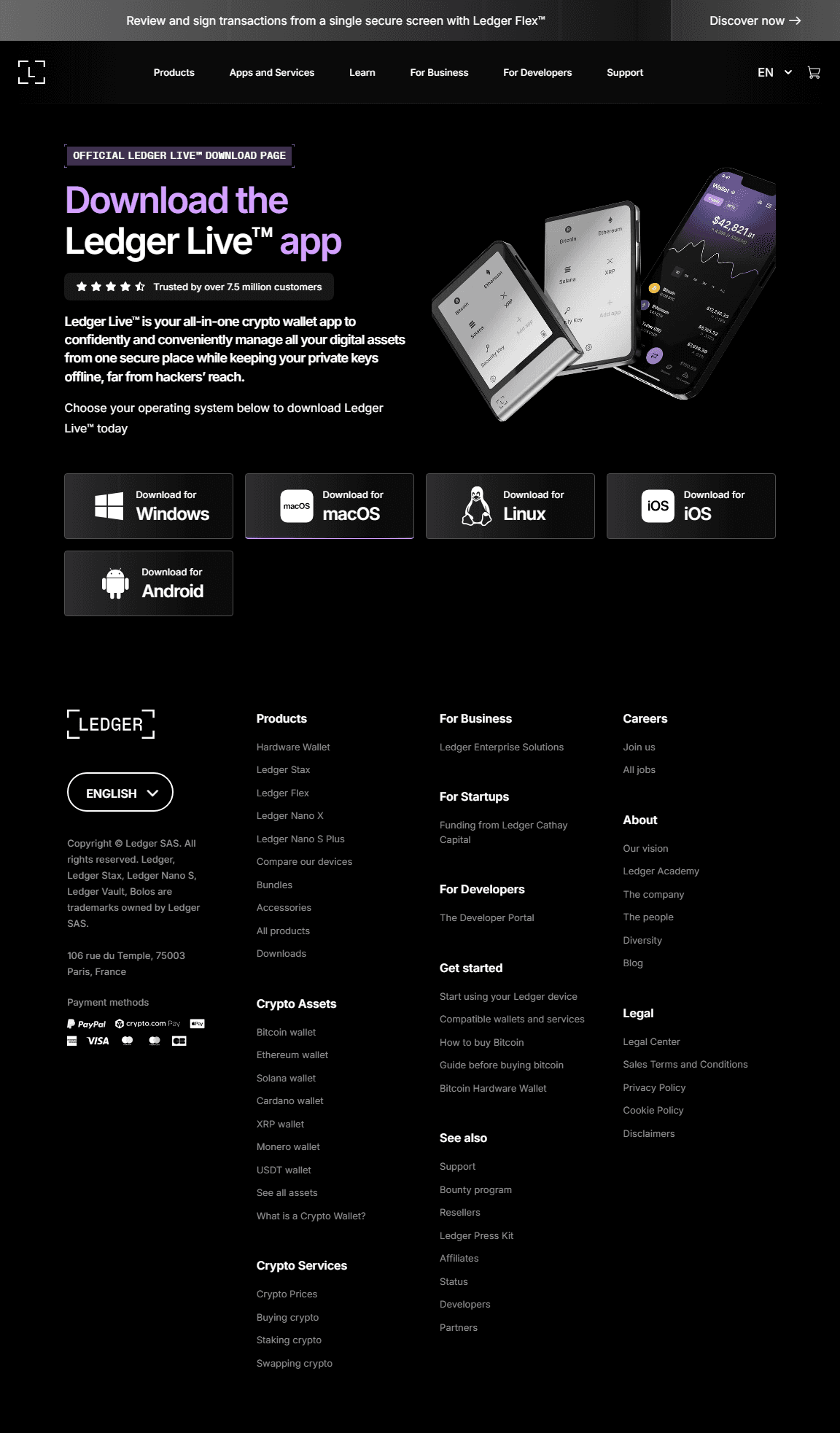
Ledger Live Login: A Secure and Reliable Way to Access and Manage Crypto Assets
Ledger Live login is a security-focused access process designed to help users safely manage their cryptocurrency through the Ledger Live application. Built to work exclusively with Ledger hardware wallets, Ledger Live login removes the need for traditional usernames and passwords and replaces them with hardware-based verification. This approach ensures that digital assets remain protected while giving users full ownership and control.
As cryptocurrency adoption grows, so does the importance of secure wallet access. Cyber threats, phishing attempts, and malware attacks are increasingly common. Ledger Live login addresses these challenges by combining cryptographic security with physical confirmation, creating a robust and trustworthy way to access crypto assets.
What Is Ledger Live Login?
Ledger Live login is the method used to access crypto accounts through the Ledger Live application using a Ledger hardware wallet. Unlike conventional login systems, there is no online account, email address, or password involved. Access is granted through ownership of the hardware wallet and direct user approval.
When logging in, users connect their Ledger hardware wallet to a computer or mobile device and unlock it using a personal identification number created during the initial setup. This step verifies identity and allows the user to securely interact with their crypto assets through the Ledger Live interface.
How Ledger Live Login Works
The Ledger Live login process begins when the user opens the Ledger Live application and connects their Ledger hardware wallet. After entering the correct PIN on the device, the wallet becomes unlocked and ready to authenticate actions.
Ledger Live communicates with the hardware wallet to display account data and request approvals. Any sensitive action, such as viewing balances, adding accounts, sending funds, or managing settings, must be confirmed directly on the hardware wallet. The user reviews the details on the device screen and confirms or rejects the request.
This system ensures that private keys never leave the hardware wallet. Ledger Live functions only as an interface, while the final authorization always occurs on the physical device. Even if the connected computer or phone is compromised, assets remain protected.
Role of the Ledger Hardware Wallet
The Ledger hardware wallet is the foundation of Ledger Live login security. It stores private keys inside a secure element, a specialized chip designed to protect sensitive data from physical and digital attacks. This secure environment isolates private keys from external systems and the internet.
All cryptographic operations, including authentication and transaction signing, are performed within the hardware wallet. The device displays transaction and login-related information on its own screen, allowing users to verify details independently. This design prevents unauthorized access and manipulation.
Security Benefits of Ledger Live Login
Ledger Live login provides multiple layers of security that significantly reduce risk. One major benefit is the elimination of passwords. Without passwords, there is no risk of credential theft, reuse, or database breaches.
Ledger Live login also protects against phishing attacks. Users are never asked to enter recovery phrases or sensitive information into the application during login. Physical confirmation on the device is always required, making impersonation attempts easier to detect.
Malware and keylogging attacks are another common threat. Even if malicious software is present on the connected device, it cannot approve transactions or access private keys without physical confirmation on the hardware wallet. This makes Ledger Live login highly resistant to online attacks.
Ledger Live Login vs Traditional Wallet Access
Traditional wallet access methods often rely on software-based security, cloud backups, or centralized accounts. These systems can be vulnerable to hacking, server failures, or unauthorized access.
Ledger Live login is different because it follows a self-custody model. There is no centralized server controlling access and no shared credentials. Ownership of the hardware wallet and knowledge of the PIN determine access, aligning with the decentralized principles of blockchain technology.
User Experience and Ease of Use
Despite its advanced security architecture, Ledger Live login is designed to be user-friendly. The Ledger Live interface is clean and intuitive, guiding users through the login process step by step.
For beginners, clear instructions and prompts make it easy to understand how to connect the device, unlock it, and confirm actions. For experienced users, Ledger Live login becomes a quick and familiar routine that balances convenience with strong protection.
The availability of Ledger Live on both desktop and mobile platforms allows users to manage assets flexibly without compromising security.
Privacy Advantages of Ledger Live Login
Ledger Live login enhances privacy by minimizing data exposure. Users do not need to provide personal information such as names, email addresses, or phone numbers. Authentication relies entirely on cryptographic proof and device ownership.
Because there is no centralized login database, the risk of personal data leaks is greatly reduced. Users retain control over both their assets and their identity, which is increasingly important in a digital world where data privacy is a growing concern.
Common Uses of Ledger Live Login
Ledger Live login is required for many everyday crypto activities. These include checking wallet balances, adding or removing accounts, approving transactions, staking supported assets, and managing device settings.
In every case, the process remains consistent. The user connects the hardware wallet, unlocks it with a PIN, reviews the request, and confirms it physically. This consistency helps users quickly recognize legitimate actions and identify suspicious behavior.
Best Practices for Safe Ledger Live Login
Although Ledger Live login is highly secure, users should follow best practices to maintain maximum protection. The hardware wallet should always be stored securely and never shared with others. The PIN should remain private and should not be written down in easily accessible locations.
Ledger Live software and device firmware should be kept up to date to ensure access to the latest security improvements. Users should also verify transaction details on the hardware wallet screen before confirming any action.
Recovery information created during setup should be stored offline in a secure location. This information is essential for restoring access if the device is lost or damaged. Users should remember that Ledger Live login never requires entering recovery phrases into applications or messages.
Responsibility and Self-Custody
Ledger Live login is built around the principle of self-custody. This means users are fully responsible for safeguarding their hardware wallet, PIN, and recovery information. While this responsibility may seem demanding, it provides unmatched control and independence.
By removing reliance on third parties, Ledger Live login empowers users to manage their assets according to their own security standards. Those who follow recommended practices benefit from greater transparency and peace of mind.
Potential Challenges and How to Avoid Them
One potential challenge of Ledger Live login is the risk of losing access if the hardware wallet or recovery information is misplaced. Without proper backups, assets may become inaccessible. This risk can be minimized by carefully storing recovery information and following setup instructions.
Another challenge is social engineering. Scammers may attempt to impersonate official services and request sensitive data. Understanding that Ledger Live login never involves sharing recovery phrases helps users avoid such attacks.
The Future of Secure Access with Ledger Live Login
Ledger Live login represents a modern approach to digital authentication that prioritizes security, privacy, and user control. As digital assets and decentralized applications continue to grow, hardware-based login systems are expected to become increasingly important.
By combining physical verification with cryptographic security and a user-friendly interface, Ledger Live login sets a strong standard for safe wallet access in the evolving digital economy.
Conclusion
Ledger Live login is a secure, reliable, and privacy-focused method for accessing and managing cryptocurrency assets. By eliminating traditional passwords and relying on hardware-based authentication, it offers strong protection against unauthorized access and online threats.
Through physical confirmation, offline key storage, and a self-custody framework, Ledger Live login empowers users to take full control of their digital assets. For anyone seeking long-term security, confidence, and transparency in crypto management, Ledger Live login provides a dependable and forward-looking solution.